
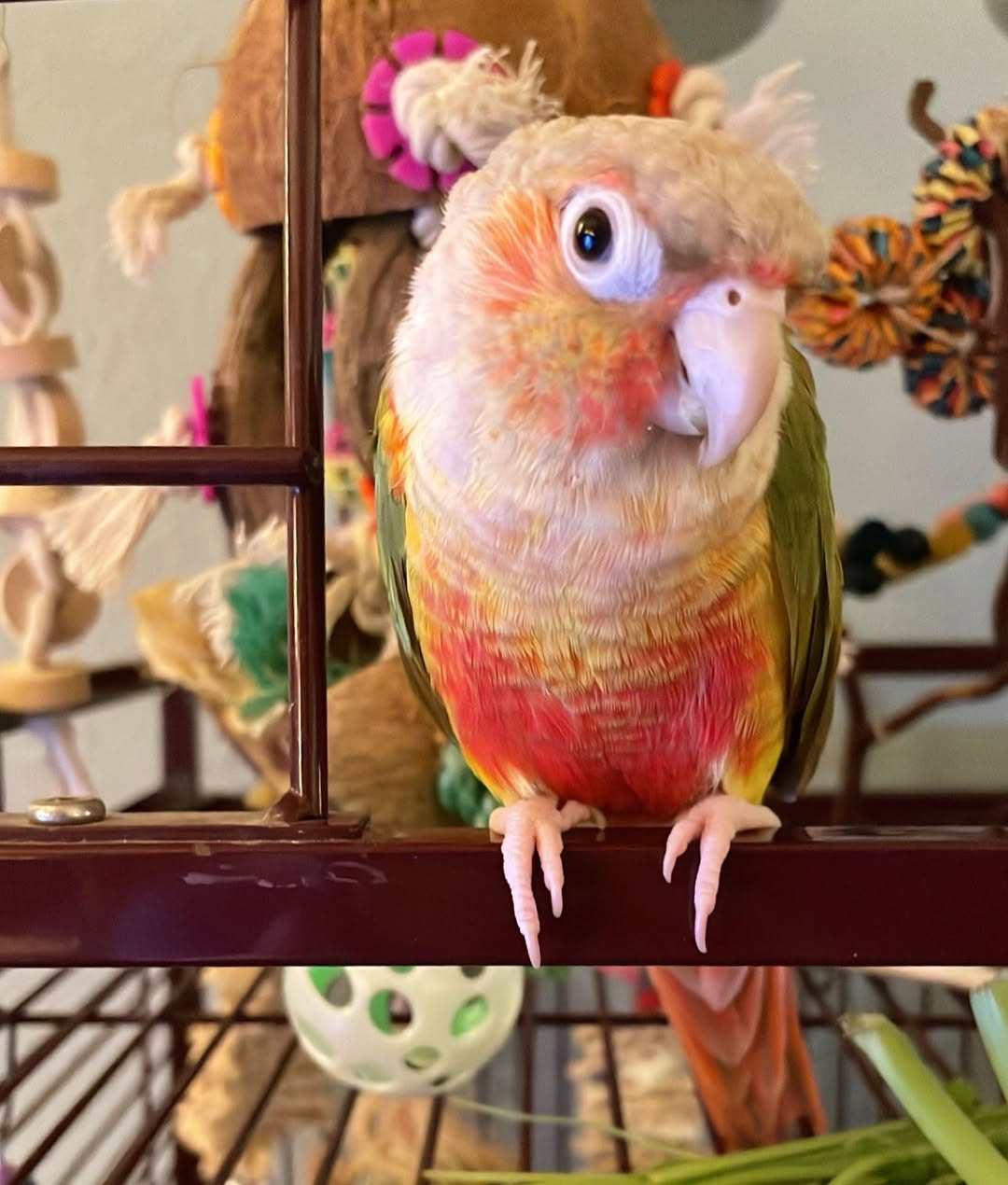
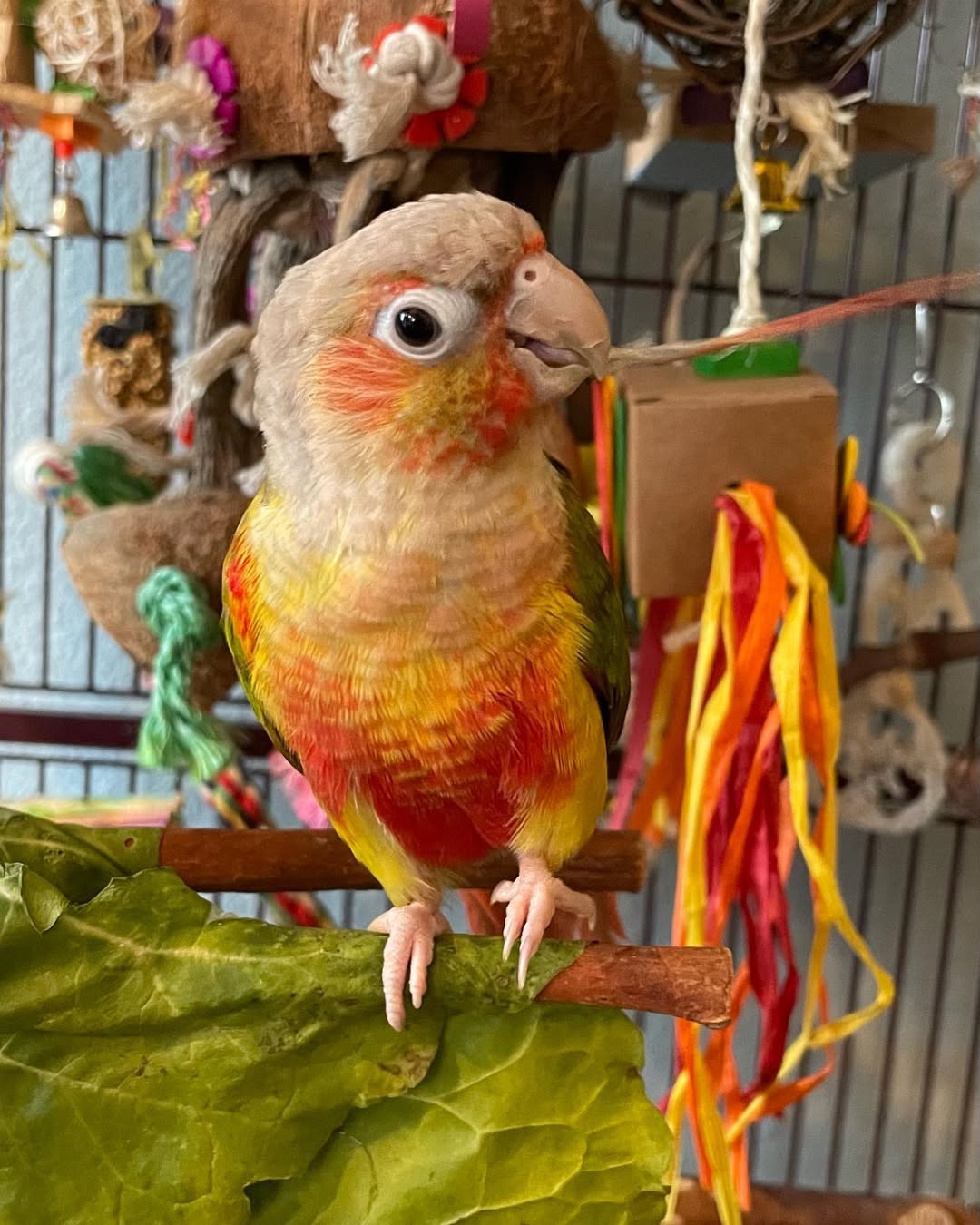
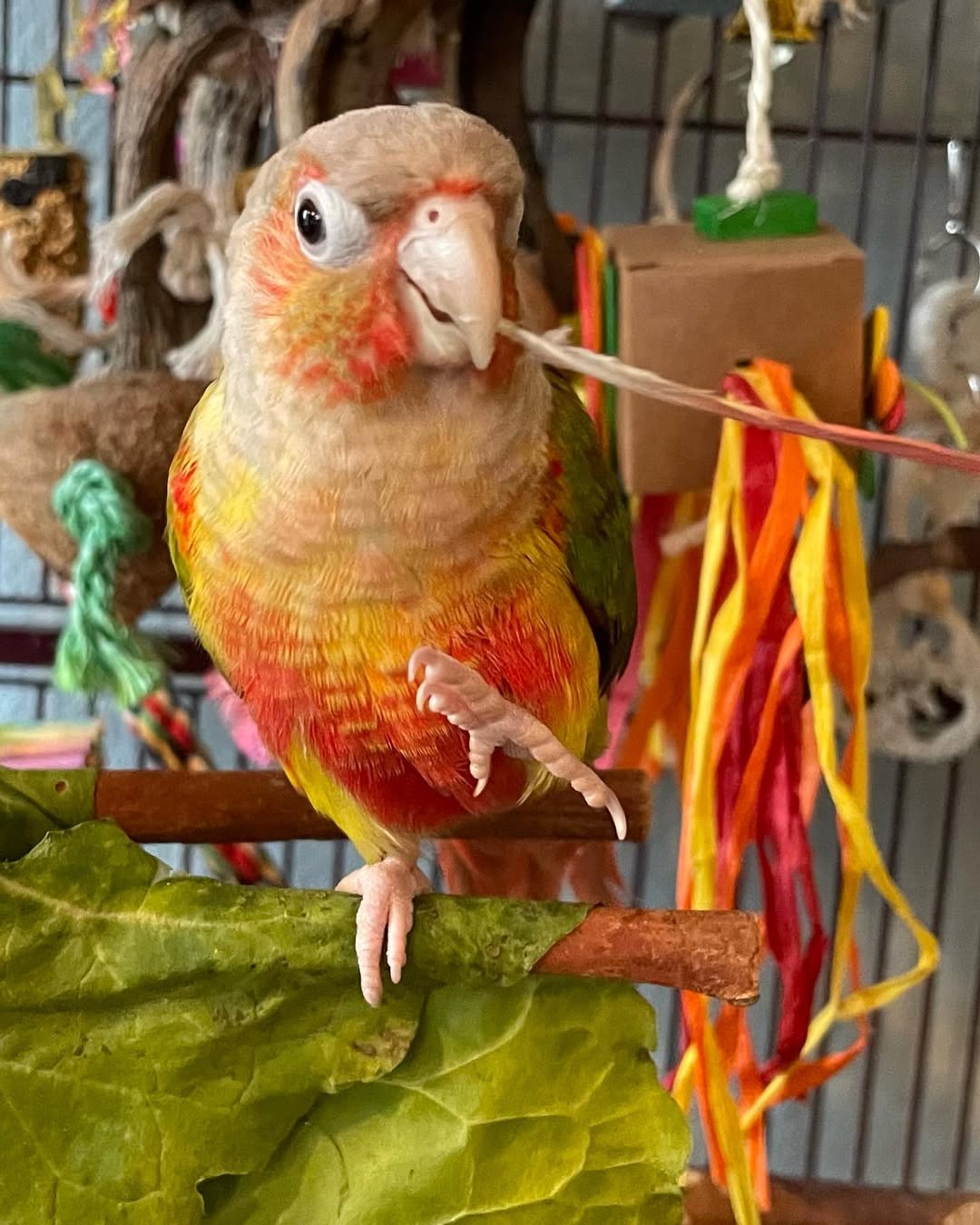
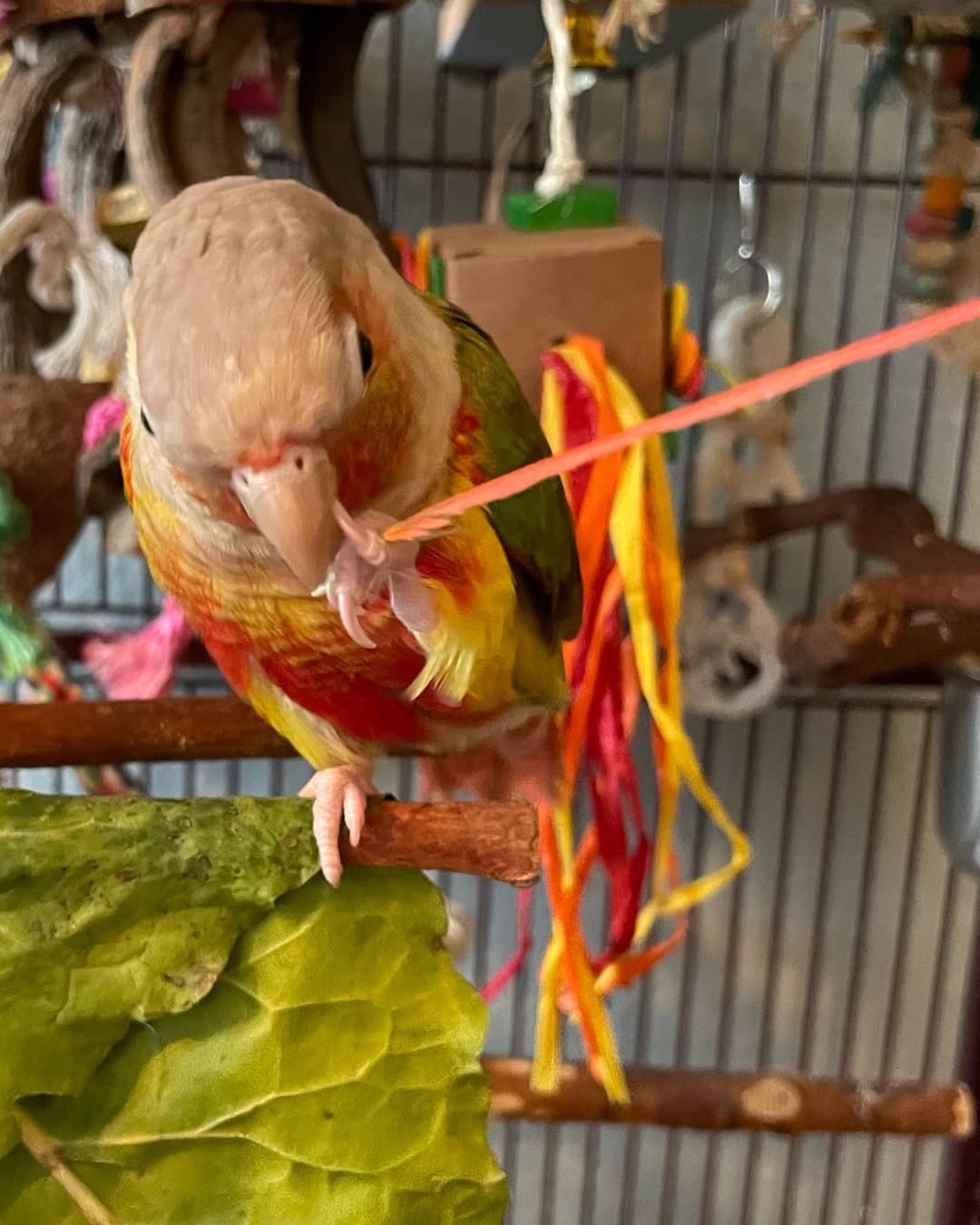
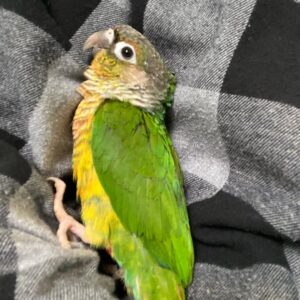
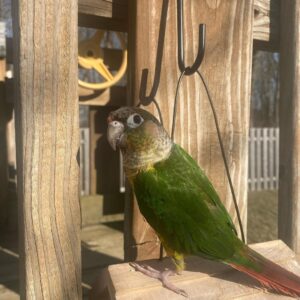
Pineapple Cheek Conure
- Name: Talulla
- Sex: Female
- Age: 4 Months
- DNA Sexed: Yes
- Hand Fed: Yes
- Hand Raised: Yes
- Fully Weaned: Yes
- Tamed: Yes
- Socialized: Yes
- Talking Ability: Mimics Simple Sounds
- Health Status: Healthy & Active
- Veterinary Checked: Yes
- Availability: Available
$750.00
Pineapple Cheek Conure – Hand-Raised Companion for Adoption
Fall in love with the vivid charm and sweet personality of the pineapple cheek conure. Known for its sunlit coloration and cuddly nature, this delightful companion bird brings playful energy and affection to any home. Our hand-raised, well-socialized juveniles are lovingly nurtured by an experienced breeder so they transition to your family with confidence. If you’re looking for a family-friendly pet bird that bonds deeply, learns quickly, and brightens every day, the pineapple cheek conure is a wonderful choice.
Why Choose Our Pineapple Cheek Conure
- Hand-raised from an early age: Gentle daily handling builds trust, confidence, and a strong human bond.
- Friendly personality: Known for cuddles, shoulder time, and a playful, curious temperament.
- Socialized: Exposed to common household sounds and routine interaction for a smooth home transition.
- Healthy and thriving: Regular wellness checks with an avian veterinarian; adoption includes a health record.
- DNA sexing available (upon request): Know your bird’s sex if you prefer.
- Clean, caring environment: Raised in a hygienic, enrichment-focused setting with quality avian care standards.
- Abundance-weaned: Weaned onto a balanced diet at the bird’s own pace to support long-term health.
- Transition support: Starter diet sample and care guidance to help your new companion settle in.
About the Bird Breed
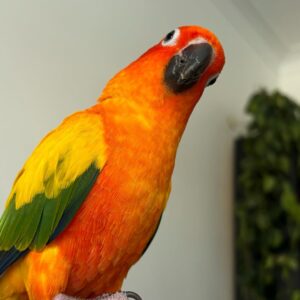
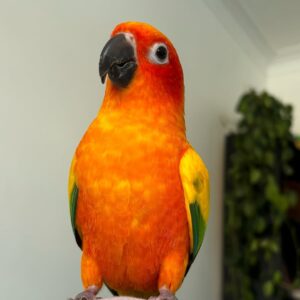
The pineapple cheek conure is a popular color mutation of the green-cheeked conure (Pyrrhura molinae), a small parrot native to the forested regions of South America, including Bolivia, Brazil, Paraguay, and northern Argentina. This mutation showcases warm peach, yellow, and lime-green tones with ruby highlights on the tail and a soft, golden chest—an exquisite palette that looks like tropical sunrise feathers.
Personality & Temperament: Pineapple cheek conures are affectionate, playful, and highly interactive. They thrive on companionship, enjoy gentle scritches, and are known for being less noisy than many other conure species—making them a great fit for households mindful of sound. With patient guidance, they can be a solid option for committed beginners and a joy for experienced parrot owners alike.
Intelligence & Talking Ability: While not the most prolific talkers, many develop a small vocabulary and adorable mimics (beeps, whistles, and household sounds). They excel at learning tricks, target training, and step-up cues thanks to their high intelligence and food motivation.
Family Compatibility: With proper socialization, they are family-friendly companion birds. They do best with gentle handling and clear, consistent routines. Supervision around young children is always recommended.
Noise Level: Generally moderate to low compared to larger conures. Expect cheerful chatter and excited calls, particularly during morning and evening activity peaks.
Size & Appearance: Compact and elegant, typically around 10 inches from head to tail and light in weight. Their soft cheeks, expressive eyes, and brilliant pineapple coloration make them a true showstopper.
Why People Love Them: Their affectionate nature, playful spirit, and stunning looks make the pineapple cheek conure a beloved pet bird for those seeking a close, interactive bond without the volume of larger parrots.
Care Guide
Diet & Nutrition
- Base diet: A high-quality formulated pellet (approximately 60–70% of daily intake).
- Fresh foods: Daily servings of leafy greens, vegetables (e.g., bell peppers, carrots, broccoli), and limited fruit for variety.
- Healthy extras: Small amounts of soaked or sprouted grains/legumes and a light, clean seed mix as an occasional treat.
- Fresh water: Replace daily; clean bowls thoroughly to prevent bacterial growth.
- Avoid: Avocado, chocolate, caffeine, alcohol, excess salt/sugar, and anything toxic to parrots.
Cage Requirements & Space
- Recommended cage size: Minimum 24 x 24 x 24 inches with 1/2″ to 5/8″ bar spacing; larger flight-style cages are strongly encouraged for exercise and enrichment.
- Perches: Provide varied natural wood diameters to support healthy feet; include a rope or platform perch for rest.
- Toys & enrichment: Offer 4–8 toys at a time and rotate weekly; mix foraging toys, shreddables, swings, and bells to prevent boredom.
- Placement: Quiet, draft-free spot with good light and some household visibility—birds enjoy being part of family life.
Exercise & Out-of-Cage Time
- Daily activity: Aim for 2–4 hours of supervised out-of-cage time for flight, climbing, and play.
- Play stands: Offer play gyms or stands with ladders and foraging opportunities to channel energy.
Grooming & General Avian Care
- Bathing: Provide a shallow dish or gentle misting 2–3 times per week to keep feathers clean and skin hydrated.
- Nails & beak: Nails may need periodic trims by an avian professional; natural wood perches and safe chew toys assist beak maintenance.
- Sleep: 10–12 hours of dark, quiet rest nightly; a sleep cage or cover can improve routine.
- Vet care: Annual avian vet exams are recommended. Promptly consult a professional for changes in appetite, droppings, or behavior.
Lifespan & Long-Term Commitment
With excellent care, a pineapple cheek conure may live 20–30 years. Plan for a long-term relationship that includes daily interaction, training, and environmental enrichment.
Training & Socialization
Pineapple cheek conures are eager learners and thrive on positive reinforcement. Short, upbeat sessions (5–10 minutes) are ideal. Use tiny, healthy treats—like a millet nibble or a single safflower seed—to reward desired behaviors.
- Step-up & step-down: Foundation skills that build trust and make handling easy.
- Target training: Guides movement and focus; great for confidence and recall.
- Recall practice: For flighted birds, indoors only in a safe, controlled space.
- Socialization: Introduce new people, gentle household sounds, and novel toys at a comfortable pace.
- Consistency: Clear routines and calm responses help prevent nipping and overexcitement.
Daily engagement—talking, whistling, offering foraging challenges, and step-up practice—creates a confident, affectionate companion bird that bonds closely with its family.
Why This Bird Makes a Great Pet
Beautiful, bright, and brimming with personality, the pineapple cheek conure forms deep emotional bonds and celebrates life’s small moments—a happy chirp at breakfast, a cuddle during movie night, and a proud display after learning a new trick. Their intelligence and curiosity make training rewarding, while their moderate size and noise level make them more manageable than many larger parrots. For families, couples, and individuals who can offer daily attention, this pet bird offers years of laughter, love, and loyal companionship.
Frequently Asked Questions
Is the pineapple cheek conure a good pet for beginners?
Yes—when beginners are committed to daily interaction, basic training, and proper avian care. Their smaller size, moderate noise level, and affectionate temperament make them accessible to new owners willing to learn.
What is the typical lifespan?
With excellent diet, enrichment, and regular vet care, many live 20–30 years. Adopting a pineapple cheek conure is a meaningful, long-term commitment.
How loud are they compared to other conures?
Pineapple cheek conures are generally quieter than larger conures. Expect lively chatter and calls, especially in the morning and evening, but not constant screeching.
Do pineapple cheek conures talk?
Some learn a few words or phrases, but their strengths are whistles, mimicry of household sounds, and expressive body language. Many owners value their trainability and cuddly nature over large vocabularies.
What should I feed my bird?
Offer a pellet-based diet with daily vegetables, leafy greens, and limited fruit. Use seeds, nuts, and treats sparingly for training and enrichment. Fresh water daily is essential.
What cage size do they need?
We recommend a minimum cage size of 24 x 24 x 24 inches with 1/2″ to 5/8″ bar spacing, plus daily out-of-cage time. Larger flight cages provide healthier exercise and mental stimulation.
Are they good with children and other pets?
They can be family-friendly with respectful handling and supervision. Always supervise interactions with young children and introduce other pets slowly and safely.
Are your birds vet-checked or DNA tested?
Our birds receive routine wellness care and health monitoring. A health record is provided at adoption. DNA sexing is available upon request when applicable.
How does adoption or reservation work?
Use the “Adopt Me” button to reserve your bird and connect with our team. We’ll guide you through readiness, pickup scheduling, and any available delivery options. Each adoption includes transition support and care guidance.
Conclusion
If you’re ready for a brilliant, affectionate companion that lights up your home, this hand-raised pineapple cheek conure is waiting to meet you. Click “Adopt Me” to reserve or inquire today—our team will help ensure a smooth, confident transition, from choosing the right cage size and diet to setting up a loving routine. Start your journey with a pineapple cheek conure and enjoy a lifetime of color, personality, and joyful companionship.
Be the first to review “Pineapple Cheek Conure”
Related products
Conure for sale
Conure for sale
Reviews
There are no reviews yet.